Welcome to Kalamna, the student blog of the Hagop Kevorkian Center for Near Eastern Studies at NYU.
Showing posts with label Arab Spring. Show all posts

Friday, May 4, 2012

Arab Spring Carpets

This will be my last blog post for the Spring. Thank you my dear readers (all seven three of you). Stay tuned for the fall return...oh the suspense!

I'll end on a colorful note as part of my effort to insert more color to this blog. Beloved "Arab Fall" and "Arab Spring" carpets by talented and avant-garde Lebanese designers bokja.

From the designers' words to your eyes:

Bokja’s map of the “Arab Fall” interweaves imported jeans as a backdrop for the sad reality of an Arab world where imported fads and fast foods have replaced timeless traditions and native delicacies: 


That was then, this is now in the hopeful season of the Arab uprisings: 


The flying elephant serves as a reminder of all the inane slogans that have been forced upon generations of an incredulous citizenry across the region.
It is this awakening that delineates Bokja’s Arab Spring map.
The background is an old valuable carpet (representing our core values) that should be the basis of any new start.
The carpet is in a dilapidated state, like many of our discarded ideals and is in need of resurrection.
The mood is that of optimism and rejuvenation.
The symbols are many, among them a woman riding a horse on the road to a new and unknown world.
If I could say a word the Spring carpet is, of course, awesome...an artistic tapestry and momento in offering to this propitious time in the Arab world when the Arabs have staked a claim to their dignity, proud of their ancient heritage, as the wellspring for their collective future. 
What I like best is the rooster raised forth from Tunisia as the crying call to the Arabs...the home of the Arab uprisings. 
And Handala. The little Palestinian refugee symbolizing (for me, anyhow) that the Arab uprisings, the Arab fight for dignity and freedom, will not be complete until freedom for the Palestinians has be achieved...until the refugees return...until the world stops turning its back on Handala. 
Neat carpets!

Wednesday, April 25, 2012

Pascal Menoret and Toby Jones On Saudi Arabia and Bahrain


Reuters. 

Recently at KEVO our very own (kind of - borrowed from NYU Abu Dhabi) Pascal Menoret and Toby Jones (Rutgers) spoke about Saudi Arabia and Bahrain in the wake of regional upheaval. 

Pascal opened up with two dates: February 24, 2011 and March 11, 2011. The former marking King Abdallah's return to the kingdom after a months long convalescence and the latter a "Day of Rage" modeled after the Egyptian gathering that culminated in the toppling of Hosni Mubarak. Thousands, if not tens of thousands, lined the streets of Jiddah to welcome the king while very few turned out for the protest. Saudi dissidents joked that the "Day of Rage" became a "Day of Police Demonstrations" as security forced constituted the only large presence. But the al Saud were not worried, notwithstanding the security precaution, and even allowed for journalists to parade the streets as a demonstration of official rhetoric: Saudi subjects are too well-cared for by their royal masters. 

20% of Saudis, according to official state figures, live on $3 and 5% live on $1. Literally, millions of improvised people in a nation resting on top of 25% of proven oil reserves. Social services in Saudi Arabia (ex. education and medical) rank low in quality. The Saudi people are clearly not well-cared for, but why does the system hold? Why the confidence of the al Saud?

Pascal outlined several reasons. The royals' ability to co-opt segments of the population, fermenting divisions between Sunnis and Shi'a, a promotion of a brand of Saudi nationalism and exceptionalism, an information blackout and the politicization of data (especially on demographics), censorship, sexual repression, and - what may be the crucial aspect of domination - the political economy of debt termed by Menoret as "the political economy of subjection". Saudis nations have accumulated heavy burdens of debt (60,000 are on a "bad debt list" and may be treated harshly, including jail) and through debt are financing their own subjection. 

Beyond that there is also the imbibed fear of repression that is recognized through the widespread prosecution of Saudis - intense and random - that has created a society were 1 in 600 Saudis are held in jail. Heavy repression and, in addition, difficulties in unifying are the challenges of Saudi dissidents and reformers.

Needless to say, a bleak picture. 

Jones spoke about Bahrain. Describing the nation as now effectively an apartheid state headed by an increasingly ruthless authoritarian (Sunni) monarchy systematically oppressing and repressing the Shi'a majority. Bahrain's regime, aided by Saudi and UAE troops, crushed a peaceful, pro-democracy movement back in 2011, but the protests continue along with their corollary of confrontations with the armed coercive state apparatus. For a background on Bahrain this Economist article is useful. 

Jones outlined a worsening reality where hopes for a compromise breakthrough are increasingly distant as the opposition has been radicalized through the bloody attempts at crackdown (the self-styled moderate vanguard has lost control and the "street" increasingly will settle for nothing less than the overthrow and exile of the royals as opposed to the erstwhile goal of constitutional monarchy) and the regime is now directed by hardliners unwilling to devise any plan of accommodation and committed to plenary obviation of the protest movement. These two polarized forces threaten to bequeath a bloody Sunni-Shi'a stalemate (akin to occupied Iraq) and regional intervention in Bahrain where Saudi, Iran, the United States and likely other nations contest the regional map on the landscape of Bahrain (akin to civil war, and arguably present, Lebanon). 

I would add (and I'm reasonably certain that Jones would agree): This is not to draw symmetry between a genuine democratic movement and an authoritarian system. The latter imposes a structure of violence that is the sparking force, conditions any reactive violent and is responsible for the entire scene of violence and its consequences.

The regime's sole basis of support has been the (mostly) Sunni middle class, but this class - Jones argues - is growing frustrated. The regime promised a crackdown would restore the order and stabilize the nation. But it is clear that political turmoil continues, especially in the villages outside of the capital Manama. Tourism, a crucial sector, has collapsed; the merchant class is shifting funds overseas, and many of the foreign banks (Bahrain's claim to fame is being a hub of mostly Islamic finance) and financial houses have relocated. Despite the regime's PR staging of a Formula One race in order to feign a turn to normality, the nation remains on precarious grounds. That remaining leg of support, akin to Syria's business class in Damascus and Aleppo, will only be aggrieved further as protests and confrontations continue and is vulnerable for the regime. 

Is there a way out for Bahrain based on liberal democracy? Jones is skeptical. The past conduct and present comportment of the regime does not augur well. 

The unifying force in Bahrain and Saudi Arabia, Jones concluded, is the political economy that the House of Saud must enforce - domestic and foreign - in the Gulf in order to maintain the royals' authoritarian rule: a regional, pro-Saudi balance and the economy of scarcity in the oil industry. 

An incredibly informative event, though sad, very sad. 

Jones' book, "Desert Kingdom" (Harvard University Press), is incredibly good and highly recommended. 

Pascal's book, "The Saudi Enigma", is on my summer's reading list but knowing Pascal I'm certain it is excellent. Pascal has a forthcoming book from Cambridge University Press, "Thugs and Zealots", on Saudi youth. 

Saturday, April 21, 2012

"Here We Have A Grand Prix To Enjoy"

Bahrain's dear and beloved foreign minister has a message for all those obnoxious journalists and human rights activists: Go bother someone else! 


Just a bit of background, after the Tunisian revolution and Egyptian overthrow of Hosni Mubarak the people of Bahrain joined their Arab compatriots in marching and rallying for democracy and representative government in their own country (a margin called for the outright abolishment of the carpet-bagging monarchy). Bahrain is effectively an apartheid state where a Sunni monarch favors the Sunni minority and disenfranchises the Shi'a majority; not only in parliamentary vote allocation (in the confined, to be generous, form of democratic-like governance allowed by the royals) but in state benefits and entitlements as well. This isn't a rigid form of apartheid akin to South Africa, but there is no denying that Shi'a are discriminated against based purely on the fact that they are Shi'a. 


Because of the sectarian schisms in the nation (a product of policy rather than history) the peaceful marches took on a sectarian character. They were never wholly Shi'a, but Sunni presence was less than forthcoming - Shi'a had a stronger claim to protest while many Sunnis feared a majoritarian government after growing accustomed to the benefits of minoritarian rule Whether the regime was willing to accommodate calls for a more robust parliament and fair distribution of votes and services is now speculation as the neighboring House of Saud sent in tanks across the Saudi Arabia-Bahrain causeway and ended the large-scale public displays of protest, although dissent and protest do continue in smaller, sporadic form (the al Saud have been aligned against any democratic movement in the Arab world, fearing precedents for their own highly repressive reign, and when they haven't been able to send tanks have sought to throw oil money in order to sabotage). And because of the sectarian split, the protests have been erroneously portrayed as pernicious doings of Shi'a Iran parlaying the Bahraini Shi'a as a fifth column to strike the Sunni Arab world. Okay then. 


For symbolic purposes, the regime even demolished the Pearl Roundabout which served as a meeting place akin to Cairo's Tahrir Square. The tanks have since left and Bahrain's government allowed for a human rights delegation as part of an effort to 'mend the wounds' and 'move on'. Really, they mean well. That delegation found evidence of not only heavy-handed police and military tactics, violent suppression of peaceful protests, arbitrary arrest and detention without charge, harassment of doctors treating the wounded, but also cases of official tortue which in many instances led to death. Over 20 Bahrains were killed during the initial phase of suppression and others have died since then (in a nation of 500,000 citizens). 


As for the Obama administration? Obama has since praised the Tunisian and Egyptian uprisings, but in Bahrain - where the US maintains the Navy's Fifth Fleet - the administration has adopted the following stance: "Victoria Nuland, the State Department spokeswoman, reiterated the administration’s position that it condemns all forms of violence. “These are unproductive, unhelpful acts in building the kind of meaningful trust and reconciliation that is needed in Bahrain, and we’re calling for...demonstrators’ restraint in ensuring that they are peaceful"


The administration's coy behavior and complete disregard for the structure of violence inflicted by the regime against an unarmed civilian population (feigning as if regime violence and demonstrators with rocks are equal) is quite reminiscent of when Hillary Clinton, hedging her bets, said that the US is not "taking sides" between the Tunisian people and the now-defunct Ben 'Ali regime. Courageously, Obama called for free election in Tunisia...after Ben 'Ali's plane departed. 


In its PR campaign to whitewash a bloody suppression aided by one of the most oppressive regimes, the authoritarian royals of Bahrain have won back their staging rights to host a Formula One race: "Bahrain's government has spent $40 million to host the global luxury sporting event, hoping to demonstrate that normal life has returned to the Gulf island kingdom after it cracked down harshly on Arab Spring demonstrations last year.  But vivid televised images of streets ablaze - as masked youths hurl petrol bombs and police fire teargas and birdshot - threaten to embarrass Formula One and the global brands that lavish it with sponsorship.  "The government are using the Formula One race to serve their PR campaign," said rights activist Nabeel Rajab. "It's not turning out the way they wanted."


And Bahrain's Minister of Foreign (Subservience) Relations does not want to hear it anymore:  
"If any here to cover ugly bloody confrontations ,go to syria. Here we have a grand Prix to enjoy. Also, there is an ongoing war n the Sudan"

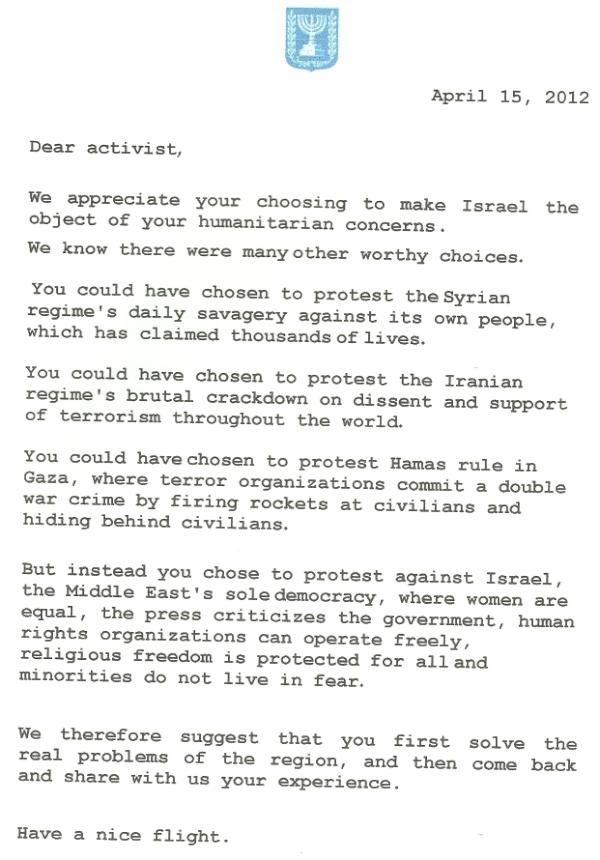
That was his Tweet. It's really cute. And made more so by borrowing the tactics of the Israeli government: 


Of course, this is a transparent tactic of obfuscation - by their standards the Syrian regime and Sudan, likewise, can point to...Bahrain and Israel. If you can't protest them all, why bother? 


But, then, why wouldn't Bahrain turn to Israel's model? It seems to have worked well enough for Israel.

The Israelis would take offense if the al Khalifa didn't. 

Friday, April 13, 2012

Syria: Bad/Catastrophe


I had the fortunate opportunity to attend a workshop on the Syria uprising last Saturday where Paulo Pinto and Bassam Haddad, Professor of Middle Eastern studies at George Mason University, offered their insights. Since I wrote about another KEVO event headlined by Pinto (see above link), I will focus solely on Haddad's remarks.


The last thirty years have marked a period of transition in Syrian Ba'ath history from a leftist alliance with labor to a rightist tilt toward business. This privatization has led to diffuse regime power which is more pervasive in society. 

Economic policies have shifted from public sector to market-focused. And the beneficiaries have been  private and regime officials who left government for business. A consequent has been polarization between rich and poor, countryside and city. 

Haddad then outlined what he termed "stubborn facts": 
  • An opposition born out of decades of oppression and brutality, but does have problematic aspects. We may no longer take the uprising at face value. Started as legitimate uprising against dictatorship, but now less about democracy. Much more sectarian and anti-democratic, whether Islamist or not. Opposition today is not the opposition of yesterday. Vulgar sectarian currents are present, much of it animated by the fierce brutality of the regime. Also the opposition has failed to be transparent or independent (influenced by regional players). 
  • But no matter how problematic the actors on the other side, this does not mean that the regime should not be overthrown and opposed. A reason not to uncritically support the regime, but to demand the opposition step up. 
  • Americans, Saudis and Qataris are engaged in real politick. The United States does not have historical credibility to speak in the name of the Syrian people and Saudi Arabia and Qatar are far from democracies to be midwifing the revolution. Self-interested foreign intervention will cause much more bloodshed (just look at Libya - Syria will be a lot worse. And arms may go to al Qaeda, regional powers will intervene, and America will not benefit). Thus no nation wants to intervene and whatever on-the-side intervention exists is not about the welfare of the Syrian people, but the regional game of politics. 
  • Returning to point one: Revolutionary leadership in the future may no longer be taken for granted. 
Dynamics of the uprising. 

1) Structure and Causes - There have been decades of oppression and economic pauperization, but brutality, repression and authoritarianism do not on their own produce mass mobilization let alone revolutions. There is the matter of dignity of individuals in the mid-to-late 1990s. After Tunisia's uprising, the similarly extant problems and structural issues collapsed into a moment of collective consciousness. Suddenly, going to the street in 2011 is different than 2010. In the end, the uprising was imminent, just cannot predict when.
2) Regime Resilience - A question of structural factors: coherent and cohesive institutions have been emptied of meaning and autonomy as a result of a strategy. Military, for instance, does not have independent leadership. Thus there is no regime schisms: if ship falls, all sink. That cohesion stiffens regime resistance (all fall or stand together) and even if there is a coup will not have legitimacy because it will be internal to regime. Regime policies have also focused on supporting the minorities. This leadership creates fear (among minorities) of a majoritarian-led opposition. Anxieties not without some serious concern although not true that they would, say, slaughtered. And much of the urban middle class has assets intertwined with the regime. Even if they wish the regime to fall are nonetheless wary about a new social order, especially considering rural revolt is not a middle class uprising. So there is a class dimension. Thus a lot of the middle class is on the sidelines, which allows the regime to benefit. Lastly, oppositional fragmentation also aids regime. 
3) Impasse - On the ground there is a stalemate caused by the fact that no party is able to limit the other: regime cannot decimate opposition and opposition cannot kill regime. But time not on regime's side: lost its ability to govern expect by brute force. Can rule but not govern. Thus shelf life is limited. 
4) Where are we going? Transformation from domestic and legitimate uprising to an illegitimate (i.e. sectarian with undemocratic trends) and international reality. Syria is being played by foreign powers in an effort to redraw regional political map. A complex picture that requires us to think along layers of reality. Many Syrians, for instance, are opposed to the dictatorship but also opposed to the opportunism of the US, Saudi Arabia and Qatar who, if allowed to guide a post-regime era, may produce an equally awful reality. 

In sum, Syria is stuck been bad and catastrophic. But there is hope in the Syrian people. Many Syrians are charting an independent course in the form of communal meetings away from regime and foreign machinations in an effort to secure a future, if the regime falls, that is rooted in the aspirations of the Syrian peoples - discussed and debated in a manner befitting a liberal polity. 

May the well-being of the Syrian people prevail. 


Thursday, April 12, 2012

Courage to Think in Tunisia

On Monday, April 9, NYU's Center for Dialogues hosted an event co-sponsored by Human Rights Watch and Scholars At Risk titled "Courage to Think: Intellectual Freedom in Tunisia and the Arab Spring" moderated by the center's director (and American of Tunisian heritage) Mustapha Tlili and featuring four Tunisian academics.

Tlili gave the opening remarks, which I will briefly summarize:

Is the "Jasmine revolution" at risk? The protesters who brought an end to Ben Ali's regime are the educated sons and daughters of the state built by Habib Bourguiba, the independence leader among a generation of intellectuals who looked to Europe and the Enlightenment. Tunisian identity has been shaped by this history and an education valuing individual liberty, openness, and women's rights. It is this transmission of values from Bourguiba that has built a modern Tunisia.  
The so-called spring did not last, however. The Islamists have ushered in the Winter. Their rhetoric had been tactical and measured but after their October 2010 electoral victory has become harsher and forceful.  
One of history's darkest trends is when a minority hijacks a liberal revolution and gains control through any possible means, including violence. Will Tunisia follow that example?  
The world's liberal democracies need to influence the Islamist government in Tunisia to adhere to a free democratic society and to enforce the law against violent ultra-conservatives as opposed to allow them carte blanche in the name of  "freedom of expression". The ruling interim government must change its course to save Tunisia's "honor and image in the eyes of the world".  
If we are not vigilant and Tunisia's revolution is hijacked then the Arab world may witness a long (decades even) winter as Tunisia serves as a warning for the region. In other words, if liberal democracy cannot prevail in Tunisia, what hope is there for (allegedly) less propitious landscapes (such as Egypt)?  
Arabs will pay the price in backwardness and poverty, and the West will not be spared either: an explosive mix of backward, poverty, and fanaticism will lead to terrorism. 
I thought this presentation was problematic for several reasons, one I voiced in the Q&A: The speaker collapses the ultra-conservative Salafis with the more moderate and amendable ruling Islamists of al Nahda into one essentialist bloc that isn't useful for purposes of political distinction and also inevitably undermines what I believe to be the crucial task of compromise between secularists and Islamists (no matter what we may think, they exist, are prominent, and have to be part of the equation) during a transitory period toward the institutionalization of democracy when political polarization is a perilous path that may retard democratic gains. 

Tlili responded with what I thought was a fair answer: There isn't a blurring of lines between Salafis or al Nahda but a continuum. al Nahda is not the instigator of violence, but its passivity in the face of it makes it complicit. Why has it allowed, or failed to properly prosecute, acts of vandalism against a Christian cemetery, violence against Jews and the Russian Orthodox community, a radical cleric who on the main thoroughfare in Tunis called for the killing of Jews, and the beating up of artists? al Nahda is either managing its electoral base or allowing the Salafis to run wild in order to intimidate Tunisians and even maintain Salafis as a potential tool of violence. Is there then a blurring between the two? 

Fair enough, but I still contend that al Nahda is more varied and diverse in outlook, even though admittedly there are pro-Salafi currents in the party. One criticism of the party I do share is their weak-kneed, at best, approach to Salafi violence (sometimes arresting them, but no public prosecutions to date) while forcefully going after a newspaper editor for alleged indecency and recently arresting, charging and sentencing two young men for posting images of the Prophet Mohammad on Facebook. al Nahda may be wary of going after Salafis because they do serve part of their base (one member of the panel suggested Nahda was hedging its bets), but the party cannot just be indiscriminately lumped in with the former. 

I also strongly contest the idea that Bourguiba had raised "sons and daughters". This is a paradigmatic statism that imagines Tunisians as less agentive, idealizes Bourguiba's authoritarian years, and may be conflated with a pinning for a return to the old system of charismatic, self-aggrandizing politics. Let us not forget that Bouguiba once stated, "I am the state". This mindset produced the president-for-life in Tunisia. And we should qualify what constitutes "modernity" since many secularists believe that only a Western way-of-life is "modern". Many al Nahda voters are education and ambitious professionals with all the commercial modern amenities, and their commitment to their faith and vote for a party they believe represents their values does not make them less "modern". Tlili, I believe, uses "modern" in an exclusive manner; a modernity that is a political project. 

And backwardness and poverty, even mixed with religious zeal, (a point made by others as well) is not the cause of terrorism. 

The other speakers, I believe, offered a more measured presentation. 

Professor Hamadi Redissi (al Manar University - School of Law and Political Sciences) spoke about the hopeful post-revolutionary turn from uncertainty toward the building of stable democracy. But he criticized al Nahda for refusing to govern in a more conciliatory manner befitting a transition period. Instead its efforts to monopolize the process, after its electoral victory, has resulted in tension and polarization: secularists and Islamists, state and society. 

He also noted how the "newcomers" (Salafi) have put al Nahda in a bind: it cannot repress them given the reality of democracy but as the same time these "newcomers" are highly aggressive and even challenge the party's understanding of Islam in Tunisia. How al Nahda navigates this moment will determine whether this period will be a moment for democratic consolidation or a portent for a bleak future. 

Then Professor Fawzia Charfi (Professor of Physics, University of Tunis and former cabinet secretary for higher education in the first post-revolutionary interim government) spoke about one of the hopeful signs in the constitutional draft proposals. A draft written by the former head of the electoral commission has been tabled; one that includes the liberal rights enshrined in the UN's Declaration of Human Rights. 

These aspirations for a liberal constitution are shared by civil society in a reflection of Tunisian gains and the history of liberalism and secularism in Tunisia, and if the nation succeeds it will be another example for the Arab world. 

Professor Ikbal Gharbi (Professor of Anthropology at Zaytuna University, the premier center for Islamic jurisprudence in the nation) spoke about how the revolution has presented an opportunity to live through the ecclesiastical debates she had been teaching for years. 

Gharbi went on to detail the history of religiosity and co-existence in Tunisia. The Jewish minority has lived for a millenium and Christianity has been present since Roman times. There are sects of Islam, ex. Shi'a, in the south. And Tunisia Islam has been heavily influenced by Sufi trends emphasizing balance, love of life and a convivial atmosphere. But this reality is threatened by the Salafis who have acted aggressively against the Jewish and Christian minority, along with Shi'as. A monastery of a Sufi saint in Tunis has been attacked, for example. Tunisia's history of religious tolerance - codified in a pact in 1861 - compels us to be vigilant. 

The Salafis are promoting the false idea that there are those pro and con Islam. The truth is that Tunisian Islam is centuries old and a faction has kidnapped it in the name of Wahhabi and a unilateral reading. But Gharbi is not without hope: Tunisian youth, in particular, have brought a new sense of unity: We should overcome this clash between religion, identity and freedom. 

Well said! 

For the record, she has been a personal victim of Salafi thuggery in the form of an apostasy accusation because she dares to teach religion as a subject of study as opposed to preaching it as infallible truth. 

Lastly, there was Habib Kazdaghli (University of Tunis-Manouba and Dean at the humanities school). Mr. Kazdaghli has been at the center of a months-long drama at his university when a collection of Salafis (not students, but "outsides" in Kazdaghli's word; and some dressed in "Afghan garb") violently took hold of the university after their 'sisters in Niqab' were denied admission to class on the grounds that a full-face veil obstructs the communicative aspect of higher education. His office was turned into a Salafi camp until they were forced out by riot police. Kazdaghli expressed gratitude for the secular and liberal President Moncef Marzouki (the head of the center-left CPR, one of two secular parties in a governing troika with al Nahda) for criticizing the Salafis and conveying his collegial support as a former academic, but had less than enthusiastic words for the way al Nahda handled the affair by being, in his view, less than forceful in defending the university. 

The universities in Tunisia can play a crucial role in creating a space for education and debate in the nation's future and he touched on the already promising changes: Deans and university boards used to be appointed by the ancien regime, but the revolution enabled all schools and colleges to have elected board of directors and trustees. Last June elections were held at 195 institutes. The revolution rid the universities of the police. On every major campus there was a police center that reported to the Interior Ministry. And student prisoners, of course, have been freed. 

Academic freedom, the concern of the panel, is still a cause calling for its courageous fighters. Every single one of the guests has been targeted by Salafis for insufficient piety or "un-Islamic" ways. And they have had to contend with ultra-conservative voices. Ms. Charfi, for instance, relates how from the beginning of her tenure as a cabinet secretary she was being petitioned by Salafis calling for gender segregation. But, as Gharbi noted, take a look at the intermingling of sexes at the hajj: Islam is a not a faith of segregation. 

In the end, the panel concluded, what is needed is a constitutional provision securing academic freedom. The Salafis may protest. That have that freedom, but freedom also needs law and order to ensure freedom for all. 

A snapshot of post-revolutionary life in Tunisia. 


Friday, February 17, 2012

Of Footballers And Moral Boundaries

German-Tunisian footballer (soccer player) Sami Khedira is kind of a big deal back home. Not only does he play for the German National team, which placed third at the '06 World Cup and second at the '08 Euro Cup, but he's also on the pitch for Real Madrid - second only to FC Barcelona. And Tunisia's football obsessed. So it is natural that he would be profiled by a newspaper. Attounissia ran a story on Khedira accompanied with a photo of Khedira and his German supermodel wife from a GQ cover: 


That was enough to land the publisher, editor in chief and foreign affairs editor in jail after the so-called prosecutor of the republic ordered their detention on grounds of violating public morals, according to the AP. An investigation is pending. 

In the meantime, the paper is fighting back. In the last several hours it has published two editorials decrying the prosecution as a "shocking precedent" threatening censorship of the press and in another detailing the support the paper has received from the National Union of Journalists (which called for “the immediate release of all journalists and the rejection of intimidation against reporters.”), the Association of Culture and Technology, and the International Federation of Journalists, along with stating that the battleground of the "Revolution Is Back". (Both links in Arabic). 

For many Tunisians it is an omission sign about the intentions of the moderate Islamist-led government and speaks to larger fears over the minor but vocal Salafite movement that has threatened and even physically attacked liberal artists and broadcasters (the paper received a bomb threat likely emanating from this circle and is being guarded by police). Many fear that the ruling party, al Nahda, will clamp down on similar papers that cross the party's definition of public morality. 

Many have taken to Facebook - where more than a fifth of the nation congregates - to condemn the arrest as a throwback to the ancien regime. The page "For a free, moderate and tolerant Tunisia" even made a mock cover with obvious inference: 

The most popular radio station, MosaiqueFM, (known for its liberal line), attacked the government for acting so quickly against journalists in the name of a photo while still not prosecuting those responsible for killing over 200 Tunisian civilians during the December 2010-January 2011 uprising that toppled ex-president Ben Ali. 

All this raises questions as to where public moral boundaries will be drawn in the future. Few, if any, nations allow unfettered freedom - at least on public airways. America's FCC imposes prohibited fines that compel broadcasters - TV and radio - to follow guidelines on "indecency" without strictly engaging in censorship. And remember the outcry over the Janet Jackson Super Bowl haft time show that introduced the 5-minute delay and self-censorship by the networks, and exiled Howard Stern to satelliet radio? 

Of course, there is a line between fines and actual detention and prosecution. Tunisia's freedom of the press is not under threat (yet, anyhow). Public morals are a common theme in Western democracies (A 1949 French law, for instances, bans the favorable portray of cowardice in children's books). Tunisia's parameters of public printing and broadcasting will likely entail a long struggle involving courts and parliamentary debate, and occasional loosening and tightening of permissible imagery and discourse. 

Furthermore, it is a healthy sign that civil society and the paper have responded so forcefully in defending their rights. Such a robust counter-attack augurs well for securing freedom of expression. And legal rights are upheld so prosecution, if it goes forward, is likely to be fair and not arbitrary. 

In all, a snapshot as an Arab nation continues to define the boundaries of its nascent democracy.